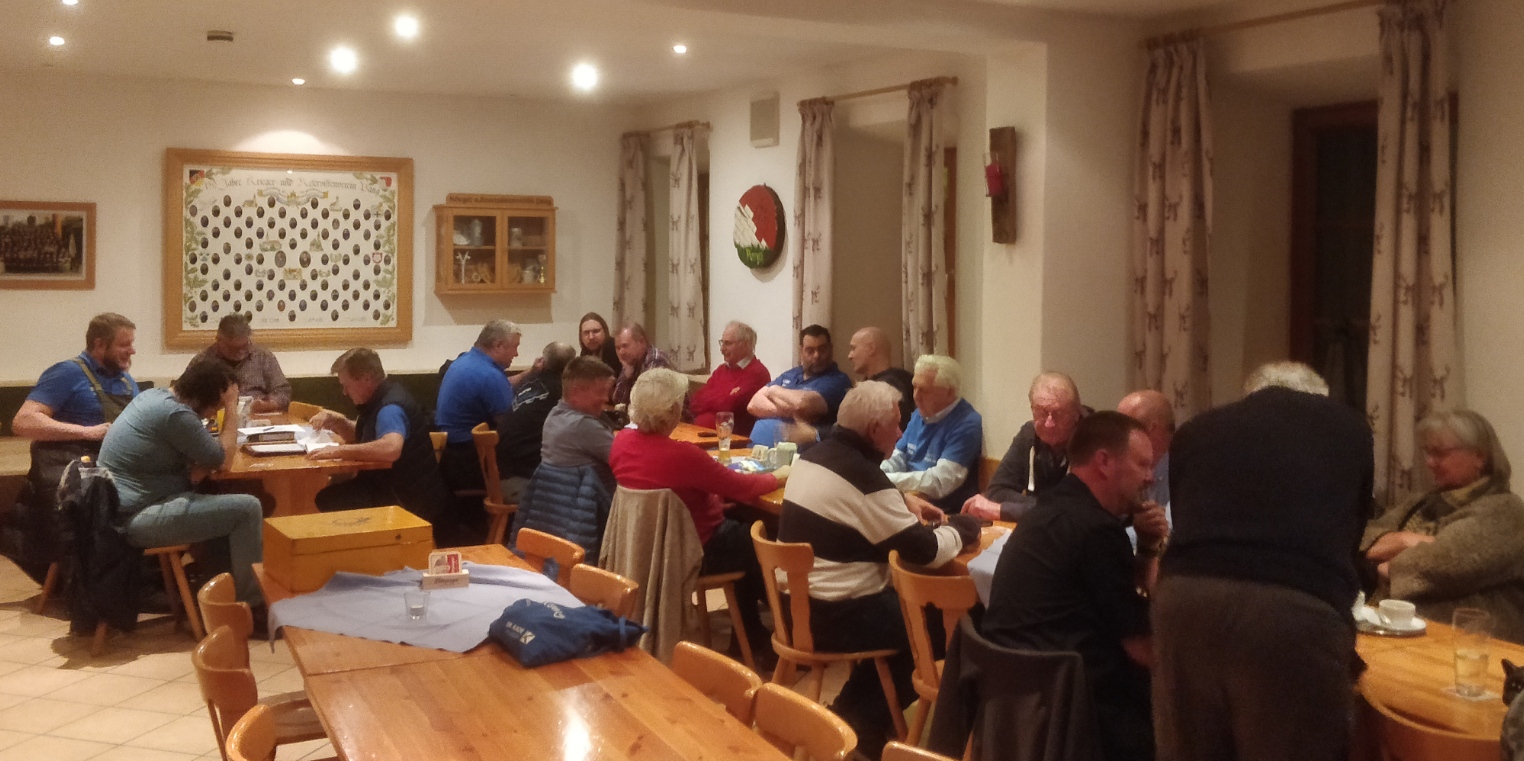
Die Versammlung war gut besucht und die Stimmung locker und sehr freundschaftlich. Chris DL1COM leitete die Versammlung. Haupthemen: – Flohmarkt in Siegsdorf am Samstag, den 21. März 2026, von 9:00 bis 13:00 Uhr. Ort: Festsaal Siegsdorf, Blaue-Wand-Straße 1–2, 83313 Siegsdorf – Vorstandswahl bei der nächsten OV Versammlung am 10. April.
Die Februar OV Versammlung drehte sich neben dem geselligen Treffen um die Vorstellung der neuen digitalen Funktechnik FreeDV.
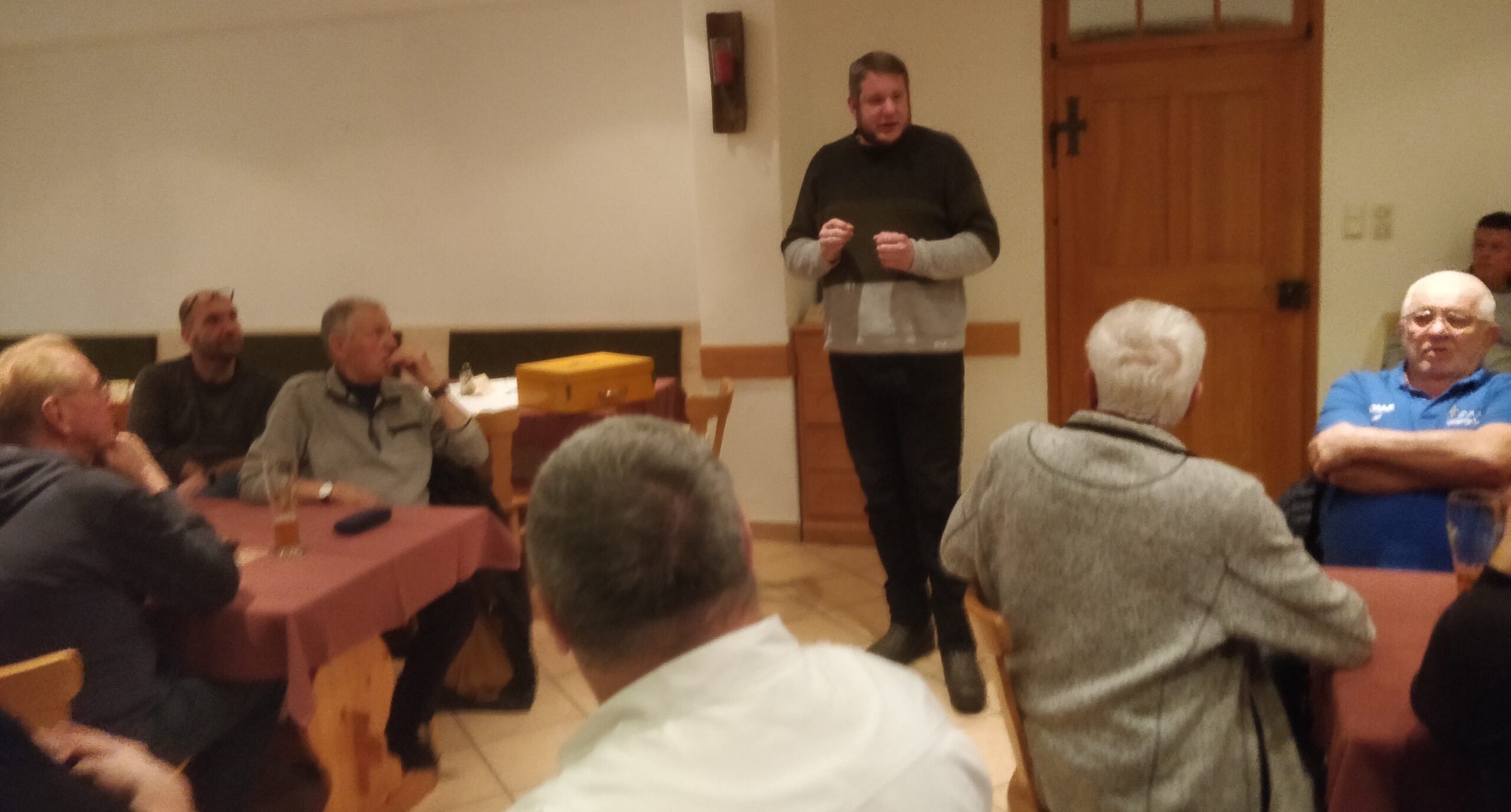
Unser Vorstand Dennis (DB6DB) hielt dazu einen einführenden Vortrag, welcher uns OMs schon sehr neugierig auf diese Technik machte. Verspricht sie doch eine leichte Implementierung für eine Sprachübertragung die viel Bekanntes in den Schatten stellt.
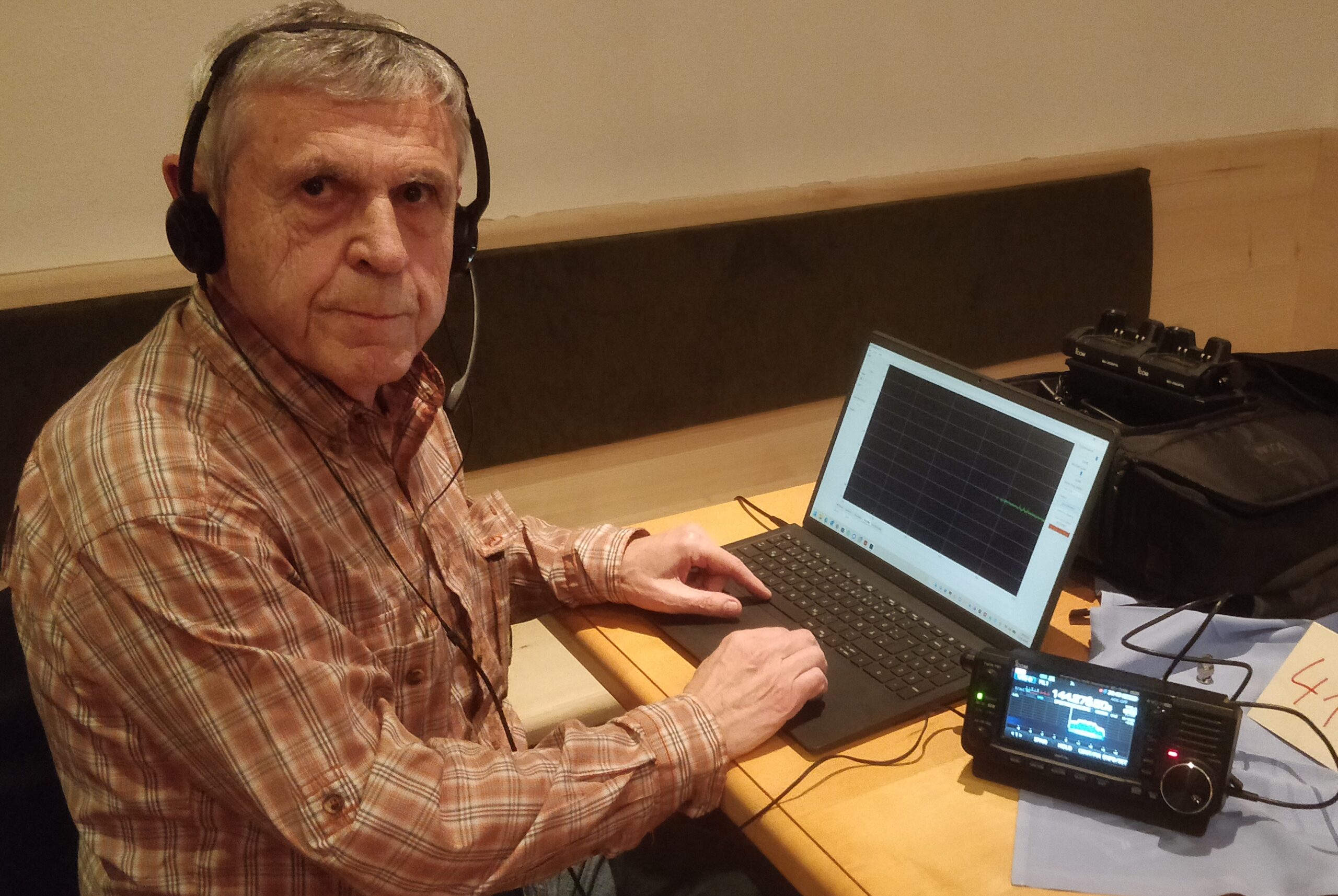
Dennis (DB6BD) und Stephan (DL3SH) haben dazu eine kleine Funkstrecke aufgebaut, sodass jeder FreeDV ausprobieren konnte. Für viele war dies dann ein tolles Erlebnis, die Stimme des Funkpartners klar und ohne jegliches Rauschen zu hören.
Nachfolgend gebe ich einen kurzen Überblick über diese Funktechnik:
FreeDV: Die digitale Stimme auf Kurzwelle
Habt ihr euch schon mal gefragt, warum wir im 21. Jahrhundert auf Kurzwelle immer noch fast ausschließlich analoges SSB nutzen, während unsere Smartphones Gigabits übertragen? Die Antwort lautet oft: „Weil digitales Voice auf HF schwierig ist.“ Doch genau hier setzt FreeDV an. Es bringt die digitale Sprache dorthin, wo sie am meisten gebraucht wird: mitten in das Rauschen der Kurzwellenbänder.
FreeDV ist ein Open-Source-Protokoll für digitale Sprachübertragung (Digital Voice) auf Kurzwelle. Im Gegensatz zu kommerziellen Systemen wie D-STAR oder C4FM sind hier sowohl das Protokoll als auch der Sprachcodec vollständig frei verfügbar.
a) Was ist FreeDV? Die Technik hinter dem Signal
Technische Eckdaten
Der Codec: Das Herzstück ist der Codec2, entwickelt von David Rowe (VK5DGR). Er ist darauf optimiert, Sprache extrem stark zu komprimieren (von ca. 700 bit/s bis 1600 bit/s).
Modulation: FreeDV nutzt meist OFDM (Orthogonal Frequency Division Multiplexing) mit mehreren Unterträgern (z. B. 14 bis 31 QPSK-Träger). Das macht das Signal sehr robust gegen das typische selektive Fading auf Kurzwelle.
Bandbreite: Hier spielt FreeDV seine Stärken aus. Ein Standard-FreeDV-Signal belegt nur etwa 1,1 kHz bis 1,6 kHz Bandbreite – das ist nur die Hälfte eines herkömmlichen SSB-Signals (2,4 kHz bis 2,7 kHz).
Neuheit RADE: Seit 2025/2026 sorgt die RADE-Technologie (Radio Autoencoder) für Aufsehen. Sie nutzt neuronale Netze, um trotz geringster Bandbreite eine Audioqualität von 8 kHz (fast UKW-Niveau) über Kurzwelle zu übertragen.
Das Schöne an FreeDV: Du musst dir kein neues Funkgerät kaufen. Jeder herkömmliche SSB-Transceiver ist FreeDV-tauglich.
b) Dein Weg auf Sendung: Das benötigte Equipment
Hardware:
Ein HF-Transceiver mit SSB-Funktion.
Ein PC/Laptop (Windows, Linux oder MacOS), Raspberry Pi 5 (Pi 4 geht gerade noch).
Ein Soundkarten-Interface (z. B. SignaLink, RigExpert oder das interne USB-Interface moderner Transceiver), um den PC mit dem Funkgerät zu verbinden.
Software:
Die offizielle FreeDV GUI-Software (aktuell Version 2.2.x).
Ein zweites Audio-Device (z. B. ein einfaches USB-Headset) für dein Mikrofon und den Lautsprecher am PC.
Alternative: Es gibt spezialisierte Hardware wie das SM1000, ein Handmikrofon mit eingebautem Prozessor, das FreeDV ganz ohne PC ermöglicht.
c) Licht und Schatten: Vor- und Nachteile
Vorteile:
Überlegenheit bei schwachen Signalen: In Modi wie 700D (700 bit/s) ist FreeDV noch lesbar, wenn analoges SSB im Rauschen komplett untergeht. SNR bis zu -2db! Kein Rauschen: Digital bedeutet: Entweder du hörst die Stimme glasklar (oder mit leichten Artefakten), oder du hörst gar nichts. Das ermüdende Rauschen von SSB entfällt. Schmales Signal: Du verbrauchst weniger Platz im Band und bist effizienter mit deiner Sendeleistung. Open Source: Keine Lizenzgebühren, keine Abhängigkeit von einem Hersteller.
Nachteile:
Exakte Abstimmung: Der Empfänger muss sehr exakt auf die Sendefrequenz abgestimmt werden. Die maximale Abweichung darf nicht mehr als +/- 25 Hz betragen. Das ist eher ein Problem auf UKW. Pegeleinstellung: Die Einstellung der Audiopegel zwischen PC und Funkgerät muss präzise sein, um das Signal nicht zu verzerren (ALC vermeiden!). Latenz: Durch die digitale Verarbeitung entsteht eine kleine Verzögerung beim Sprechen.
d) Ausblick: Wohin geht die Reise?
FreeDV ist keine statische Technik, sondern ein lebendiges Experimentierfeld. Die Integration von KI-basierten Codecs (RADE) ist erst der Anfang. Es gibt bereits erste Transceiver, die FreeDV nativ unterstützen, ohne dass ein PC nötig ist. In einer Zeit, in der das solare Maximum uns zwar tolle Bedingungen beschert, die Bänder aber auch immer voller werden, ist eine schmalbandige, digitale Lösung wie FreeDV der logische nächste Schritt für unseren Funkbetrieb.
Du willst es ausprobieren? Die meisten Aktivitäten findest du auf 14.236 MHz (USB) oder 7.190 MHz. Lad dir die Software runter, hör erst mal rein (das geht sogar über WebSDRs!) und genieße die digitale Kurzwelle!
FreeDV Aktivitätszentren (Frequenzen)
Wichtig : FreeDV wird immer in USB betrieben, auch auf den unteren Bändern (80m/40m), wo man normalerweise LSB nutzt.
Band Frequenz (USB) Anmerkung 80m 3.625 MHz / 3.643 MHz Regionaler Funkverkehr 40m 7.177 MHz / 7.190 MHz Sehr aktiv in Europa 20m 14.236 MHz Hauptfrequenz weltweit 17m 18.155 MHz Bei guten DX-Bedingungen 15m 21.313 MHz DX-Frequenz 12m 24.943 MHz Gelegentliche Nutzung 10m 28.330 MHz / 28.720 MHz Für Versuche bei offenem Band
Tipp : Da man digitale Signale auf dem Wasserfall nicht immer sofort als „FreeDV“ identifiziert, empfiehlt sich ein Blick in den FreeDV QSO Finder (https://qso.freedv.org/). Dort tragen sich Stationen ein, die gerade auf Sendung sind oder auf einen Anruf warten.
We use cookies on our website to give you the most relevant experience by remembering your preferences and repeat visits. By clicking “Accept All”, you consent to the use of ALL the cookies. However, you may visit "Cookie Settings" to provide a controlled consent.
This website uses cookies to improve your experience while you navigate through the website. Out of these, the cookies that are categorized as necessary are stored on your browser as they are essential for the working of basic functionalities of the website. We also use third-party cookies that help us analyze and understand how you use this website. These cookies will be stored in your browser only with your consent. You also have the option to opt-out of these cookies. But opting out of some of these cookies may affect your browsing experience.
Necessary cookies are absolutely essential for the website to function properly. These cookies ensure basic functionalities and security features of the website, anonymously.
Cookie
Dauer
Beschreibung
cookielawinfo-checkbox-analytics
11 months
This cookie is set by GDPR Cookie Consent plugin. The cookie is used to store the user consent for the cookies in the category "Analytics".
cookielawinfo-checkbox-functional
11 months
The cookie is set by GDPR cookie consent to record the user consent for the cookies in the category "Functional".
cookielawinfo-checkbox-necessary
11 months
This cookie is set by GDPR Cookie Consent plugin. The cookies is used to store the user consent for the cookies in the category "Necessary".
cookielawinfo-checkbox-others
11 months
This cookie is set by GDPR Cookie Consent plugin. The cookie is used to store the user consent for the cookies in the category "Other.
cookielawinfo-checkbox-performance
11 months
This cookie is set by GDPR Cookie Consent plugin. The cookie is used to store the user consent for the cookies in the category "Performance".
viewed_cookie_policy
11 months
The cookie is set by the GDPR Cookie Consent plugin and is used to store whether or not user has consented to the use of cookies. It does not store any personal data.
Functional cookies help to perform certain functionalities like sharing the content of the website on social media platforms, collect feedbacks, and other third-party features.
Performance cookies are used to understand and analyze the key performance indexes of the website which helps in delivering a better user experience for the visitors.
Analytical cookies are used to understand how visitors interact with the website. These cookies help provide information on metrics the number of visitors, bounce rate, traffic source, etc.
Advertisement cookies are used to provide visitors with relevant ads and marketing campaigns. These cookies track visitors across websites and collect information to provide customized ads.